Chipmaker’s fate hangs in the balance
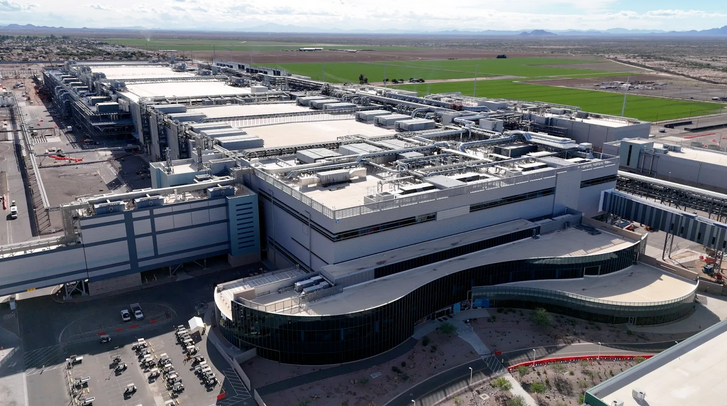
Intel’s campus in Chandler, Arizona, now includes five chip fabrication plants, with Fab52 being the newest addition
Intel bets on 18A node to revive its foundry ambitions
Once the world’s most valuable semiconductor company, Intel has seen its market capitalisation tumble in recent years as it lost ground to Taiwan Semiconductor Manufacturing Co. (TSMC) and poured billions into an effort to regain its technological edge.
Now, Intel says it has reached a critical milestone: high-volume production of its 18A process node, the advanced manufacturing technology it hopes will power a turnaround.
The challenge, however, is persuading major chip designers to trust Intel as a contract manufacturer. For the moment, Intel remains its own biggest customer. The first flagship product on 18A will be its Core Ultra Series 3 PC processor, code-named Panther Lake, due to launch in January.
“For now, it’s essentially an internal node,” said Daniel Newman, CEO of Futurum Group. He noted that many chipmakers have invested heavily in TSMC to secure reliable capacity and yields, making them reluctant to switch suppliers.
Intel’s push is centred on its new Fab 52 facility in Chandler, Arizona, which the company showcased to CNBC in November. About 50 miles away, TSMC is also expanding production in Phoenix, where it manufactures 4-nanometre chips, while its most advanced 2nm technology remains in Taiwan.
On paper, Intel’s 18A node rivals TSMC’s 2nm process in areas such as transistor density. But after years of delays on earlier nodes, Intel is still ironing out defects that affect yields — the number of usable chips produced from each wafer.
“Yield challenges are common at leading-edge nodes,” said David Yoffie, a Harvard Business School professor and former Intel board member, pointing to early issues with Nvidia’s Blackwell GPUs at TSMC that were later resolved.
Intel’s renewed foundry strategy began under former CEO Pat Gelsinger, who took over in 2021. After his departure last December, Lip-Bu Tan assumed leadership in March. In a July memo, Tan acknowledged that Intel had “invested too much, too soon” without sufficient customer demand.
As Intel waits for a major external client, government and industry backing has followed. In August, the US government took a 10 per cent stake in Intel through an $8.9 billion investment, largely tied to grants under the CHIPS Act. Around the same time, SoftBank invested $2 billion, and in September Nvidia added $5 billion, agreeing to use some Intel technologies without committing to its foundry services.
Inside Fab 52, Intel is betting that its 18A technology can finally win over large customers — and help restore the company’s standing at the forefront of global chip manufacturing.
Project News