Ireland’s China visit - how do we handle Beijing
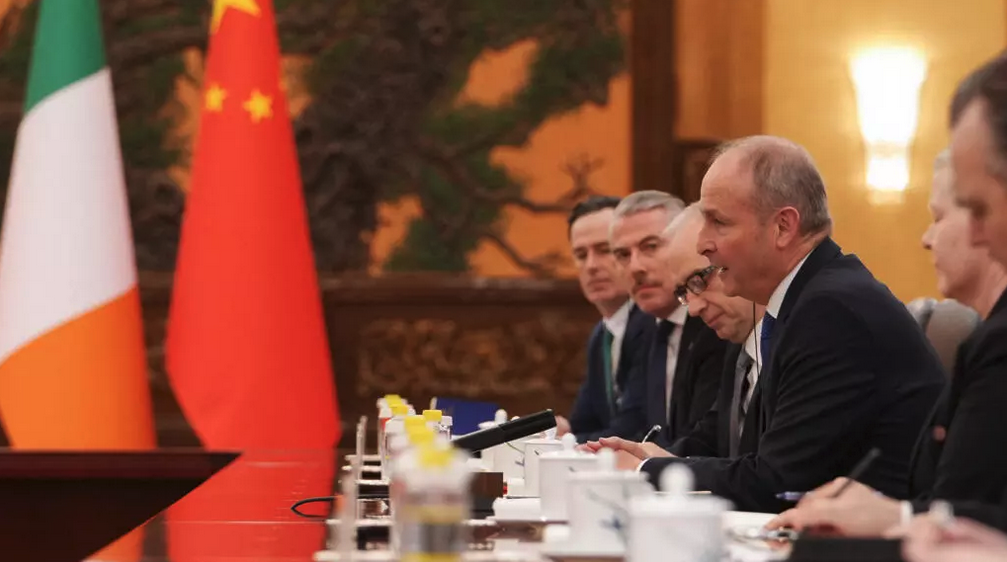
Prime Minister Micheal Martin speaks during a bilateral meeting with China's President Xi Jinping in Beijing on January 5, 2026
Ireland’s Taoiseach Micheál Martin arrived in Beijing this week on the first visit by an Irish leader to China in more than ten years, placing Ireland squarely within Europe’s increasingly delicate recalibration of its relationship with the world’s second-largest economy. The five-day trip follows Emmanuel Macron’s visit in December and precedes a February trip by Friedrich Merz, highlighting the careful balancing act European leaders are attempting as transatlantic ties become more uncertain under Donald Trump’s unpredictable policy direction.
Martin’s visit comes against the backdrop of a record €305.8bn EU trade deficit with China in 2024 and growing concern in Brussels over economic dependencies that could become strategic liabilities. While EU institutions continue to emphasise “de-risking” and “strategic autonomy”, individual member states are quietly pursuing pragmatic bilateral engagement with Beijing, exposing divisions over how Europe should position itself between a less reliable United States and an increasingly assertive China.
Macron’s December visit to Chengdu illustrated this tension. Accompanied by almost 40 French business leaders, he focused on securing market access while pressing Beijing to influence Moscow over the war in Ukraine. Agreements were signed on nuclear energy cooperation, yet little progress was made on Europe’s core concerns around trade imbalances and China’s support for Russia.
Those imbalances remain stark. EU imports from China reached €519bn in 2024, compared with exports of just €213.3bn, with manufactured goods dominating Chinese shipments. In sectors such as automotive and semiconductors, Chinese firms continue to gain ground despite tariffs, undercutting European producers through scale, subsidies and strategic investment within the EU.
While initiatives such as the EU Chips Act aim to bolster Europe’s industrial resilience, questions remain over whether they can move quickly enough to reduce growing dependencies in a rapidly shifting global landscape.
Project News