Meliori Builds Europe’s First Polymeric Wafer Frame Manufacturing Hub
Based in Croatia, Meliori is currently the only company in Europe capable of manufacturing
From the power modules used in electric vehicles (EVs) to the neural processing units powering generative AI, semiconductors underpin many of today's most transformative technologies. Behind every microchip lies a sophisticated production process that depends on highly engineered support components, including wafer-thin polymeric support frames.
Recognising both the technological importance and market opportunity, photovoltaic and semiconductor specialists Antonia and Marko Omazić founded Meliori Polymer Engineering, selecting Sumitomo (SHI) Demag’s IntElect all-electric injection moulding machines as the foundation of their new European manufacturing venture.
Based in Croatia, Meliori is currently the only company in Europe capable of manufacturing, cleaning, refurbishing and distributing polymeric semiconductor support frames. To meet the industry's demanding standards for precision, cleanability and process repeatability, the company installed two Sumitomo (SHI) Demag IntElect injection moulding machines to produce wafer frames.
The production facility has been designed around quality and automation. Alongside the moulding cells, Meliori operates a fully automated CNC system developed specifically to remove burrs from eight-inch wafer frames. An automated washing and drying cell further supports the rigorous cleanliness requirements essential for semiconductor manufacturing.
To ensure contamination-free packaging, the site also includes a dedicated ISO Class 6 cleanroom. Designed with future expansion in mind, the cleanroom has sufficient capacity to accommodate two additional production lines as demand for semiconductor structural frames grows.
Supporting the Foundation of Chip Manufacturing
For Antonia Omazić, wafer frame stability is one of the most critical yet overlooked aspects of semiconductor production.
"Without the stability of the semiconductor wafer, chips simply would not exist," she explains.
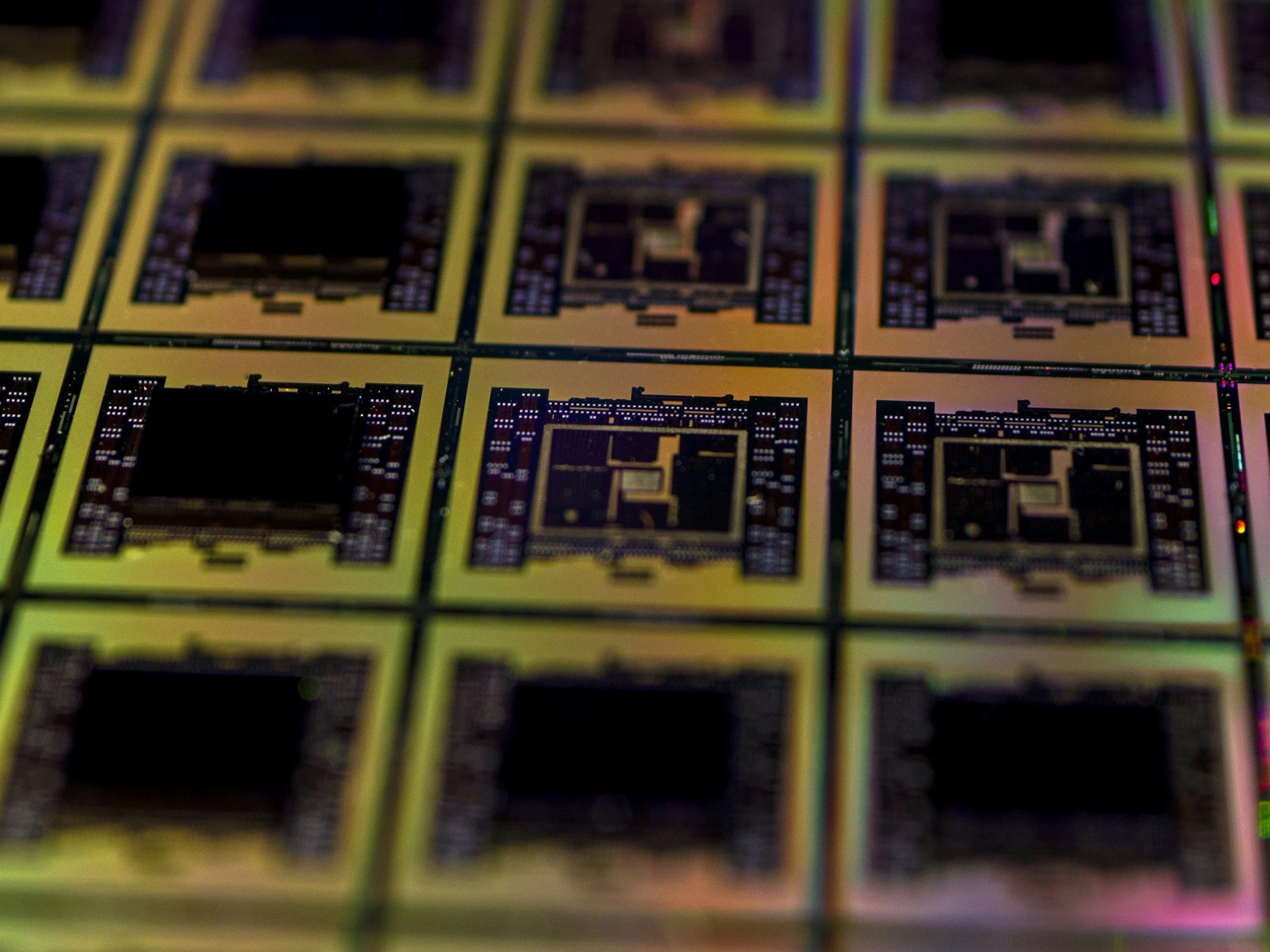
The manufacturing process involves attaching a polymer film to a wafer support frame before securing a chip-bearing disk to the assembly. Depending on the technology and wafer size, a single disk may contain anywhere from 1,000 to 10,000 chips. During the subsequent cutting stage, exceptional stability is required, as the chips are mechanically hard yet thinner than a strand of human hair.
Identifying an Untapped Opportunity
Like many start-ups, Meliori faced challenges attracting interest from larger equipment suppliers despite operating in a high-growth market.
"The biggest motivation for us was working with a local supplier who was genuinely interested in bringing our idea to life," recalls founder Marko Omazić. "Matjaž Kos from Top Teh invested the time and energy, presenting us with options for a complete production line. This included the all-electric moulding machine from Sumitomo (SHI) Demag."
According to Matjaž Kos, the installation of a standard IntElect machine delivered precisely what Meliori needed.
"It was a simple case of a quality machine providing everything required to surpass the precision, reliability and unit-cost performance of wafer frames currently being imported into Europe from Asia," he says.
The Meliori team also valued direct access to local expertise for machine validation, process optimisation and operator training.
Driving Sustainability Through Circular Manufacturing
Drawing on their backgrounds in materials science and photovoltaic technologies, Antonia and Marko carefully selected a glass fibre and mineral-filled polyphenylene sulphide (PPS) compound for the wafer frames. The material offers the mechanical strength and dimensional stability required by semiconductor manufacturers while enabling an innovative refurbishment model.
"Rather than producing single-use components that create unnecessary waste, we wanted a durable frame that could be returned to our facility for reuse," explains Antonia Omazić.
Returned frames undergo inspection, refurbishment, cleaning, repackaging and redistribution to customers. This circular approach forms a key part of the company's sustainability strategy.
"This refurbishment service is central to our sustainability journey and our water-conscious manufacturing and cleaning processes," she adds. "Combined with the energy efficiency gains delivered by the Sumitomo (SHI) Demag IntElect machines, the resulting reductions in CO₂ emissions and waste are significant."
Strengthening European Semiconductor Independence
As semiconductor manufacturing continues to face pressure to reduce its environmental impact, Meliori believes its business model aligns closely with Europe's sustainability objectives.
"By integrating renewable energy sources, utilising innovative materials and embracing circular economy principles, the European semiconductor industry can significantly strengthen its sustainability credentials," says Antonia Omazić, who holds a PhD specialising in polymers and semiconductors.
Localising wafer frame production also provides greater control over quality standards while helping mitigate geopolitical and supply chain risks that have challenged global semiconductor markets in recent years.
Anatol Sattel, Chief Sales Officer at Sumitomo (SHI) Demag, sees the company as part of a broader shift within Europe’s semiconductor ecosystem.
"The semiconductor market in Europe is evolving rapidly," he notes. "Demand for smartphones, laptops, electric vehicles, AI systems, industrial robotics and healthcare technologies is driving the need for local infrastructure, research hubs and manufacturing support capabilities. Companies such as Meliori, supported by regional machinery manufacturers and integrators, will play an important role in strengthening Europe's technological self-sufficiency."
Positioned for Growth
According to Dave Raine, Managing Director for Sumitomo (SHI) Demag UK and Ireland, Ireland represents a particularly significant semiconductor market.
Driven by demand for high-performance electronics and advanced AI applications, Ireland's semiconductor sector generates annual revenues of approximately €15.5 billion. With further market growth projected and sustainability remaining a key priority, Raine believes companies such as Meliori are well positioned to benefit.
That confidence is already being reflected in customer demand. By focusing exclusively on European customers, Meliori has secured a major wafer frame pre-order from one of Europe's largest semiconductor manufacturers.
"Receiving this intent to order was the strongest validation of our product and business model," says Antonia Omazić.
Looking ahead, the company plans to continue expanding its product portfolio, investing in innovation and ultimately establishing its own research and development centre.
"Our long-term strategy is to build on our market knowledge, diversify our offerings and develop our own R&D capabilities," she says. "All while strengthening our position as a true Made in the EU semiconductor supplier."

Project News