Semiconductor Prices Skyrocket
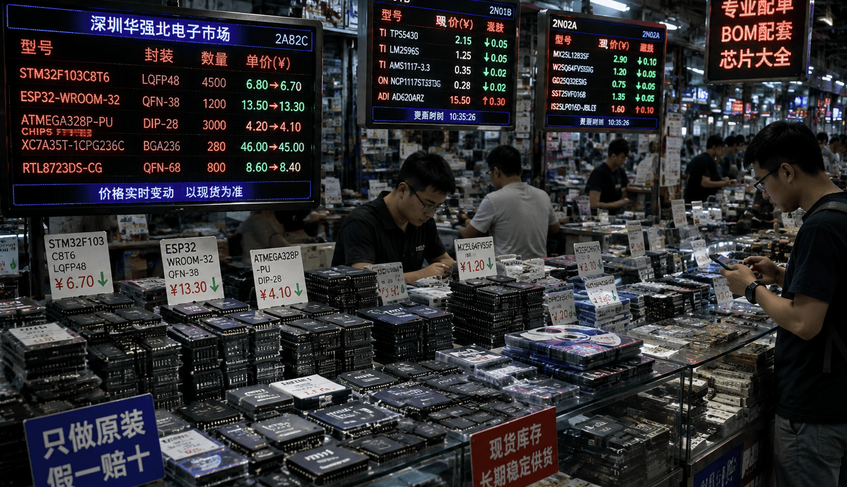
Over 20 chip manufacturers announce second price hikes in 2026, with AI-specific MLCCs surging 3-10x and delivery lead times extending to mid-2027.
July 1, 2026 marked the beginning of a broad-based semiconductor price surge across the global chip industry, covering power semiconductors, power management ICs, and memory devices. Unlike previous price adjustments limited to specific sub-sectors, this round involves over 20 major chip manufacturers simultaneously implementing their second price increases of the year, Blue Whale News reported.
Reporting from Shenzhen's Huaqiangbei electronics market, journalists found the pricing system effectively broken. AI-specific multilayer ceramic capacitors (MLCCs) saw price increases of 3 to 10 times for certain specifications, with one vendor describing price changes occurring within hours. The supply crunch is unprecedented, with lead times for popular Infineon components extending to mid-2027 according to distributor communications.
The price increases reflect three converging forces: raw material costs, AI demand explosion, and capacity constraints. Manufacturing costs continue to rise across the supply chain, with critical chemicals, specialty gases, gold and copper for packaging, and wafer foundry fees all escalating. Semiconductor companies including Infineon, Texas Instruments, and STMicroelectronics raised prices 10-25%, while Chinese players including Silan Micro, Yangjie Technology, and Starpower Semiconductor increased prices by no less than 15%, with Jucheng's NOR Flash products rising 25%.
AI demand has fundamentally reshaped the chip market. AI servers consume 3 to 5 times the power of traditional servers, requiring dramatically more power semiconductors per unit. High-end AI servers can require over 5 times the power components. Infineon projects its AI data center power solutions revenue will reach EUR 1.5 billion in fiscal 2026, climbing to EUR 2.5 billion next year. NVIDIA's Blackwell chips have driven massive data center power system upgrades, creating sudden demand spikes that the supply chain cannot absorb.
On the supply side, foundries including TSMC and Samsung have been steadily reducing 8-inch wafer production capacity in favor of 12-inch advanced processes. Global 8-inch capacity actually declined in 2026, with fab utilization rates stuck at 85-90% with virtually no spare capacity. New production lines require two to three years to come online, meaning the supply gap is likely to persist through at least the first half of 2027.
At Huaqiangbei, the situation has created acute dilemmas. Hoarders gamble on selling at the peak while downstream customers anxiously compare prices and delay purchases. One vendor summarized the paradox: Prices are up, but business is harder. Customers are waiting, afraid of buying at the top. The semiconductor industry is facing its most challenging supply-demand imbalance since the pandemic era, with AI-driven demand fundamentally reshaping production priorities across the sector.

Project News