Advancing Ireland’s software innovation ecosystem
Ongoing projects show breadth of Lero’s research impact
Ireland has built a global reputation as a destination for technology, innovation and high-value R&D, and Lero, the country’s software research centre, is an important part of that proposition.
Lending weight to that credential, an economic impact study by the Kemmy Business School found that every €1 invested in the Science Foundation Ireland-funded Lero centre generated more than €5 for the Irish economy on average, amounting to a national gross output of over €515 million between 2005 and 2018.
Anchored at the University of Limerick, Lero brings together leading software researchers across Ireland with a clear industry focus, helping to connect academic excellence with commercial impact. This is bolstered by Ireland’s vibrant software sector, with the country hosting 16 of the top 20 global technology companies, while Lero serves as a key pillar in that wider ecosystem.
Ireland’s appeal as an innovation location is rooted in the depth of its technology base, its talent pipeline and its ability to support collaboration between research centres, universities and global companies. Lero reflects that model.
The country has the second highest density of software developers per capita in the European Union (EU), according to the State of European Tech report. Another study by Sequoia Capital found that Dublin has greater access to AI and data science talent than any other European city. Ireland also boasts the highest level of STEM graduates aged 20-29 per capita in the EU.
The centre, which comprises of 300 researchers across 12 academic institutions, was established to coordinate leading software teams from universities and institutes of technology in a single research network with strong industry engagement, helping translate advanced software research into practical outcomes for business and society.
Founded in 2005, Lero’s research spans core areas from software engineering to driverless cars, artificial intelligence, cybersecurity, healthtech, and fintech. These are exactly the kinds of capabilities that matter as companies invest in AI, digital platforms, connected products and trusted software systems.
Backed by Amazon Web Services (AWS), researchers at Lero are set to embark on a $1 million plus project to develop future approaches and strategies for the use of AI-generated software code in academiac and industry. The project will explore how computer science education is evolving in response to emerging technologies, with a particular focus on preparing students for careers in modern software development. It also aims to develop strategies to enable educators to integrate and deploy AI-based code-generation tools and practices into curriculum design and delivery.
Another high-profile project is Lero’s four-year collaboration with gaming giant Logitech G, worth around €2.5 million. The research project will involve testing 2,000 top video gamers to better understand how gamers train and compete, advancing the industry’s scientific knowledge base of gaming and e-sports performance.
Commenting on the project, Logitech gaming innovation engineer Niall White said: “Lero are the best in the business at this type of software research, and the outputs from this project will help us design and create new gaming products for augmenting gaming performance – mouse, headsets, keyboards and controllers, for example.”
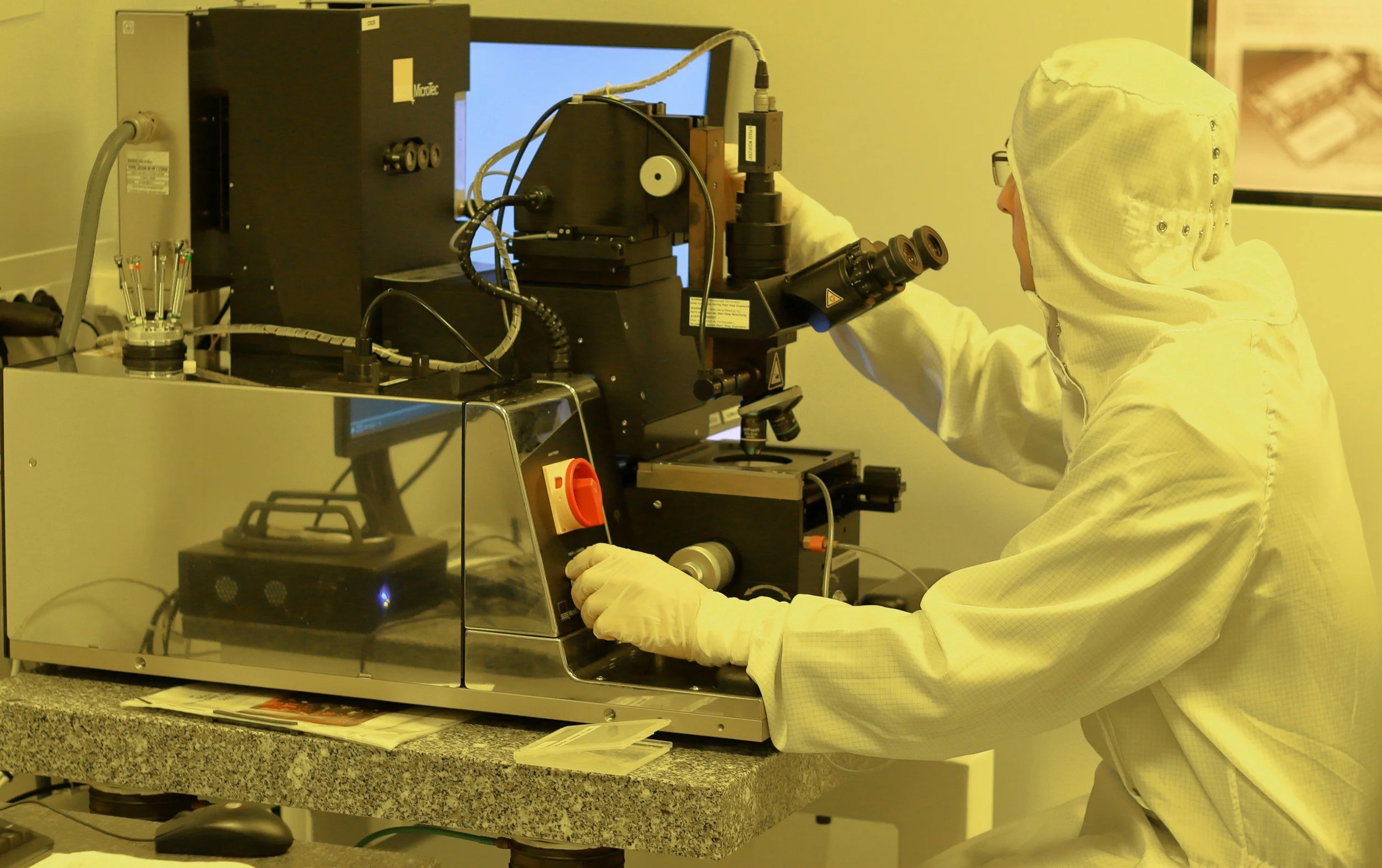
Lero’s research is also pushing into frontier hardware innovation. In a significant breakthrough, a Professor Conor Ryan-led team at Lero harnessed machine learning technology to design and fabricate a silicon chip from scratch in a “world first”. Following the successful manufacture of a Lero-designed chip by TSMC, the team plans to work with selected global chip design and fabrication companies, potentially paving way for a high-tech, export-led industry in Ireland.
Lero is also applying software and AI expertise to player welfare in sport. In a collaboration with the Irish Rugby Football Union and Trinity College Dublin’s Complex Software Lab, Lero is helping develop an AI system in the sports technology to analyse rugby tackles, with the aim of improving technique and reducing injuries.
A defining strength of Lero is its academic reach across Ireland. The centre’s partner institutions include the University of Limerick, Dublin City University, Dundalk Institute of Technology, NUI Galway, Maynooth University, Trinity College Dublin, University College Cork and University College Dublin. This distributed model gives companies access not just to one campus, but to a nationwide research capability spanning multiple disciplines and talent pools.
Recent AI-related work by Lero shows active collaboration between academic researchers and enterprise partners on issues with direct industry relevance, from trustworthy AI to the future of software engineering itself.
Lero researchers at the University of Limerick are currently working on research in partnership with Irish sports analytics company DANU to capture and analyse athlete-specific data, with hopes that the results may boost Ireland’s chances of success at the 2028 Olympics.
Similarly, Lero has partnered with Maynooth University, along with Dublin City Council and Irish Aviation Authority, for a two-year, €600,000 study to help prepare Dublin and other European cities for widespread drone usage.
Lero’s industry model closely matches the kind of research-commercialisation environment that supports IDA Ireland’s mission. In 2022, Nvidia teamed up with Lero researchers — the first time that the chip giant partnered with a European institution for scientific research into e-sports — to help gamers improve their chances of winning e-sports prize money.
The research centre has a long track record of working with companies and public bodies, and its earlier industry partner list includes major international names such as Dell, Ericsson, Hewlett Packard, IBM, Intel, and Microsoft, alongside a wide range of Irish and international firms.
Today, that collaboration continues through projects that connect multinational companies with Irish research expertise. The partnership with semiconductor giant Arm is one clear example, with the four-year research collaboration aiming to create advances in car cameras and AI to improve road safety in automated vehicles.

Project News