Intel's "Ohio One" Project: Progress, Delays, and Renewed Momentum
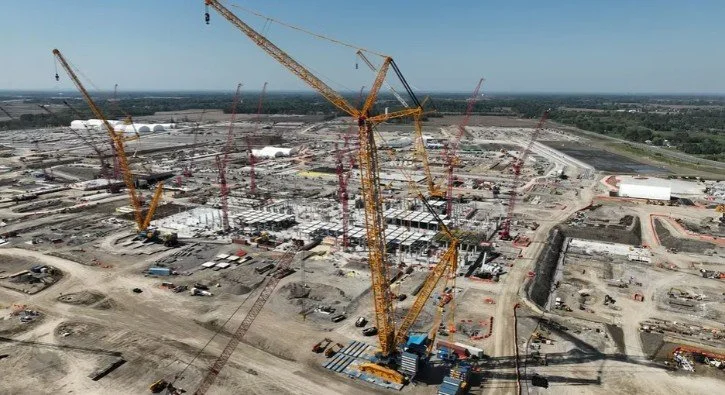
Intel committed to an initial build of two advanced fabs. This first phase alone represented an investment of roughly $20 billion
In January 2022, Intel unveiled an ambitious plan to build a massive semiconductor manufacturing campus in Ohio. Billed as one of the largest chip fabrication complexes in U.S. history, the plan originally envisioned up to eight cutting-edge fabs (chip factories) on a sprawling site near Columbus. The initial phase called for two state-of-the-art fabs costing around $20 billion, with hopes of starting chip production by 2025. The project garnered enthusiastic support from government leaders, who touted it as a win for American tech manufacturing and national supply chain security.
Launch of "Ohio One": An Ambitious Vision in 2022
Intel officially announced the Ohio project in early 2022. The company pitched it as a “highly ambitious” fab campus that would fortify America’s position in leading-edge chip production. The new site in Licking County (near Columbus) would be Intel’s first brand-new manufacturing location in decades.
From the outset, Intel committed to an initial build of two advanced fabs. This first phase alone represented an investment of roughly $20 billion, expected to create around 3,000 Intel jobs, plus thousands of construction jobs, in the region. The company aimed to have those first two fabs online by 2025, producing chips with its next-generation process technologies. At a groundbreaking ceremony in September 2022, Intel’s then CEO Pat Gelsinger, hailed the project as a “pivotal moment” for rebuilding a U.S.-based semiconductor supply chain.
Challenges and Delays: Pushing Back the Timeline
In the months after the announcement, Intel’s bold timeline began to slip. A mix of external and internal challenges slowed the project’s momentum. The semiconductor industry faced headwinds in 2022–2023 which forced Intel to tighten its belt. The company underwent a management overhaul and rounds of layoffs that hampered its ability to execute massive new construction projects at the originally intended pace. By 2023, it became evident that the initial 2025 target for opening the Ohio fabs would not be met.
Intel quietly revised its schedule, and the project’s commitment dates slipped further out. Company officials eventually acknowledged that the first Ohio fabs wouldn’t be operational until 2030 at the earliest, with internal reviews hinting at a 2031 timeframe. This amounted to roughly a five-year delay from the original plan. Intel also indicated it would focus on completing the initial two modules before committing to additional fabs, effectively postponing the full eight-fab vision indefinitely.
Scrutiny and Reaffirmation in 2025
As timelines slipped and visible progress lagged, skepticism in Ohio grew. By 2025 – three years into the project – some wondered if Intel’s grand plans would ever fully materialize. This scrutiny peaked when U.S. Senator Bernie Moreno publicly pressed Intel for answers. In a letter to the company, Sen. Moreno noted that the fabs were “initially supposed to launch this year [2025],” but had been delayed to at least 2030, and he questioned whether Ohio’s taxpayers were “being taken advantage of” by a project that seemed stalled
Intel responded by reaffirming its commitment to the Ohio project. The company assured that the Ohio One campus remained an important part of Intel’s long-term plans to expand leading-edge manufacturing on U.S. soil. In its reply, Intel emphasized that the project was delayed but not canceled, and that it was working closely with local and federal stakeholders to get back on track. While the response did not detail a new timeline, it underscored that the Silicon Heartland vision was still alive. Intel’s public recommitment in late 2025 helped allay some fears, signaling that the company fully intended to move forward once conditions allowed.
Renewed Momentum: Funding and Partnerships Spur a Comeback
Late 2025 brought concrete signs that Intel’s Ohio One venture was shifting out of idle and back into gear. A major catalyst was the resolution of federal incentives. In August 2025, Intel’s new CEO Lip-Bu Tan met with President Donald Trump, after which the White House released $8.9 billion in CHIPS Act funding to Intel – in exchange for roughly a 10% equity stake in the company. This infusion of capital provided a much-needed boost to Intel’s construction budget and demonstrated Washington’s commitment to the project.
Around the same time, Intel gained an important industry partnership. Graphics-chip leader Nvidia agreed to a $5 billion collaboration with Intel; a deal interpreted as Nvidia potentially becoming a major customer for Intel’s coming Ohio fab output. This was a strong vote of confidence in Intel’s technology roadmap. With Nvidia’s backing and federal support secured, Intel appeared “revitalized” and began accelerating work on Ohio One after a period of stagnation.
Construction Progress and Outlook in 2026
Now in 2026, on-the-ground progress in Ohio is both visible and accelerating. Three years of work have transformed the once-empty site in New Albany into a busy construction zone. Intel reports that workers have logged over 9.4 million labor hours on the Ohio One project so far. They have poured enough concrete to fill 13 stadiums and installed thousands of feet of underground piping and conduit for the facility’s infrastructure. These figures illustrate the massive scale of the undertaking, even if chip production is still some years away.
Most recently, early 2026 has brought a surge of new activity, indicating that construction is ramping up. In January 2026, Bechtel posted a wave of new job listings for the site. The postings seek project managers, superintendents, welders, electricians and other skilled workers to support the build-out in New Albany. This hiring push by the contractor is a strong indicator that the long-delayed project is finally moving forward at full speed.
According to the updated schedule, Intel now targets having the first two fabs (Mod 1 and Mod 2) up and running by 2030–2031. Mod 1 is slated to begin production first, with Mod 2 following roughly a year later. By the time these Ohio fabs start producing chips, Intel may already be onto process technologies beyond 14A. Still, the Ohio site is being built with flexibility for future cutting-edge nodes, ensuring it can manufacture whichever advanced chips are in demand when it opens.
For all the delays, the project is now tangibly moving forward. With fresh investments, an expanding workforce, and major construction milestones reached, Ohio One is ramping up toward its long-awaited debut. If current plans hold, the early 2030s will see high-volume, leading-edge semiconductors rolling off production lines in central Ohio – fulfilling the Silicon Heartland promise, albeit a few years later than originally envisioned. Intel’s commitment to the Ohio One project appears stronger than ever, and the next few years will be crucial in turning this ambitious vision into reality.
Project News