Trump threatens new tariffs on Europe - The Irish Response
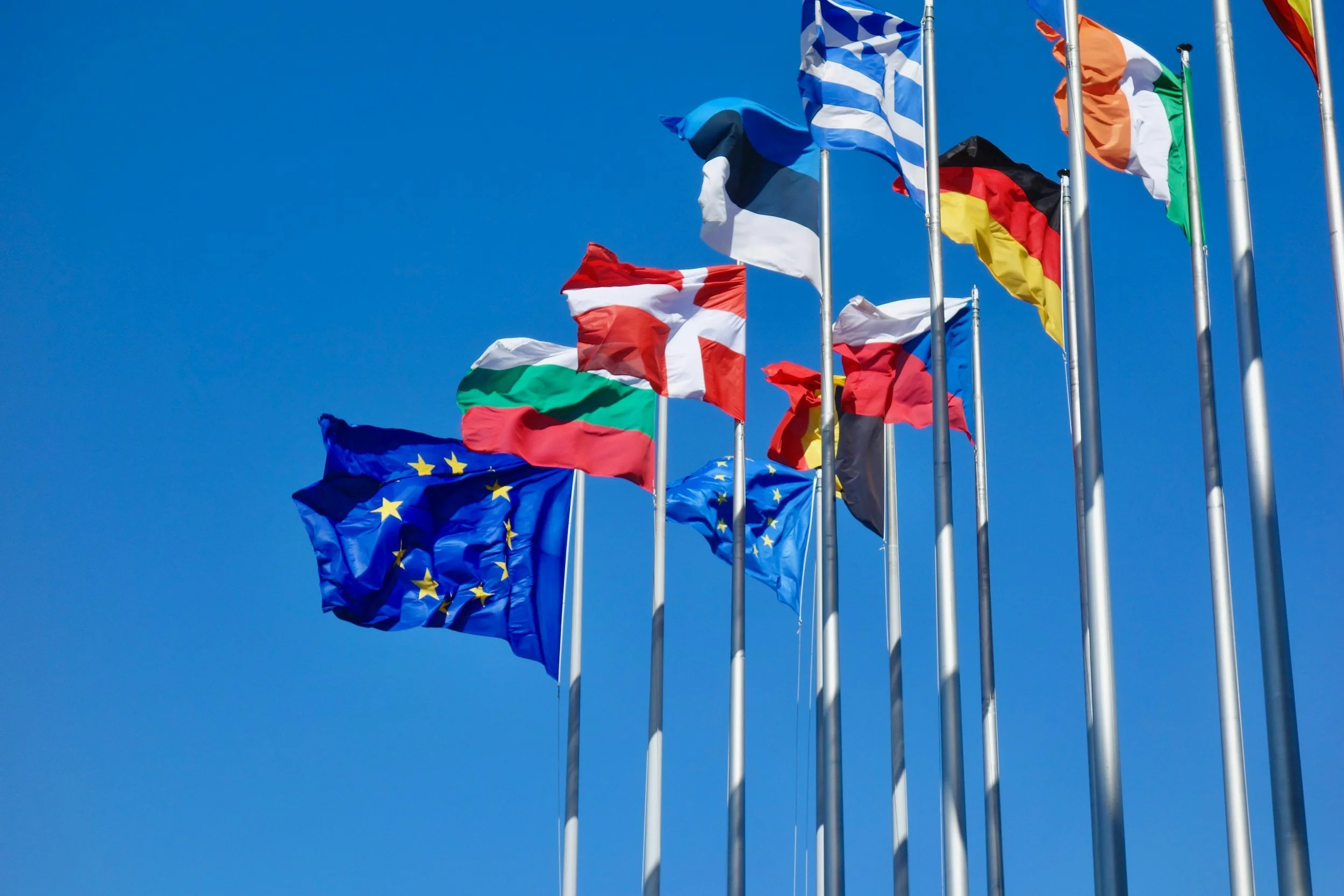
EU leaders are expected to convene an emergency summit this week
On 17 January, President Trump announced plans to impose escalating tariffs on a number of European countries unless the United States is permitted to acquire Greenland, significantly intensifying a long-running dispute over the future of the Arctic territory, which is a self-governing part of the Kingdom of Denmark.
In a post on Truth Social, President Trump said a new 10% tariff would apply from 1 February to “any and all goods” imported into the US from Denmark, Norway, Sweden, France, Germany, the Netherlands, Finland and the United Kingdom. These countries are already subject to earlier tariff measures introduced by his administration. According to the President, the tariff rate would increase to 25% on 1 June and remain in force until an agreement is reached for the “complete and total purchase” of Greenland by the United States.
No Executive Order has yet been published, leaving uncertainty around the precise scope of the measures, whether they would stack on top of existing tariffs, and whether any exemptions would apply. Given the stated objective of exerting political pressure, it is widely expected that the tariffs would apply broadly and cumulatively.
President Trump has repeatedly stated that he will accept nothing short of full ownership of Greenland. Officials in both Denmark and Greenland have firmly rejected the proposal, stressing that the territory is not for sale and has no intention of joining the United States.
EU and Irish response
EU leaders are expected to convene an emergency summit this week to discuss a coordinated response to the Greenland dispute and the proposed tariffs. A senior European Commission official has confirmed that a counter-tariff package targeting €93 billion of US goods is now under active consideration. This package is based on measures prepared last year in response to earlier US tariffs.
The proposed EU response includes existing countermeasures on €21 billion of US exports, such as poultry and alcohol, as well as an additional €72 billion package covering sectors including automotive and aerospace. European Council President António Costa has warned that the EU is prepared to defend itself against “any form of coercion.”
France is reportedly urging the European Commission to activate the Anti-Coercion Instrument (ACI), which could allow the EU to restrict US foreign direct investment, limit intellectual property protections, and constrain US companies’ access to the EU market.
In Ireland, officials are increasingly concerned that the dispute could undermine the EU-US trade agreement reached last summer. Briefing papers prepared for Tánaiste Simon Harris described the agreement as “of critical importance” to Ireland, with the Department of Finance warning that its collapse would likely lead to higher tariffs, retaliation, and increased economic uncertainty for Irish exporters.
IEEPA tariff case
The US Supreme Court is still expected to rule on the legality of tariffs imposed under the International Emergency Economic Powers Act (IEEPA), which has generated more than $140 billion in revenue since 2025. The case could determine whether the President has authority under IEEPA to impose such measures. A ruling against the administration could open the door to tariff refunds, though no decision or implementation guidance has yet been issued.
Semiconductor investigations
In parallel, the US administration has concluded two investigations into the semiconductor sector. On 14 January, President Trump issued an Executive Order outlining actions arising from a Section 232 national security review covering semiconductors, semiconductor manufacturing equipment and related products.
The administration has adopted a two-phase approach. Phase one imposes a 25% tariff on specified covered products entered for consumption on or after 15 January. Products subject to this measure are exempt from other tariff regimes, including country-specific reciprocal tariffs. Phase two may introduce broader tariffs following the conclusion of ongoing trade negotiations with key jurisdictions.
The tariffs apply to certain products classified under HTSUS subheadings 8471.50, 8471.80 and 8473.30, provided they contain logic integrated circuits meeting defined performance and bandwidth thresholds. However, exemptions apply for products used in US data centres, research and development, repairs, startups, public sector applications, non-data-centre consumer and industrial uses, and other activities deemed to strengthen US technology supply chains or domestic manufacturing.
Further developments are expected in the coming weeks, and the situation remains under close review.
Project News