NASA partners with Microchip for next-gen spaceflights.
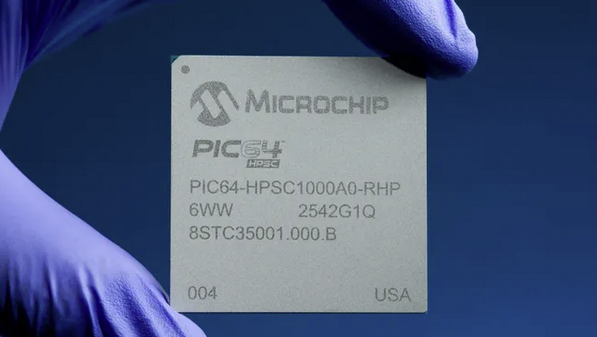
The new system-on-chip (SoC) architecture will integrate both computing and networking functions
NASA has partnered with Microchip Technology to develop a new generation of spaceflight processors capable of delivering up to 100 times the computing performance of current space-grade chips. The initiative, known as High-Performance Spaceflight Computing, is aimed at supporting future missions to the Moon, Mars, and deep space while also advancing next-generation satellite technologies in low Earth orbit.
The new system-on-chip (SoC) architecture will integrate both computing and networking functions onto a single device, helping reduce system complexity, improve power efficiency, and lower overall mission costs. NASA said the technology will be produced in two variants: a radiation-hardened version for long-duration and deep-space missions, and a radiation-tolerant version designed for commercial and near-Earth applications.
A major focus of the programme is scalability and intelligent power management. The chips are being designed to selectively disable non-essential functions during low-power operations, helping spacecraft extend mission life and optimise energy consumption in extreme environments. NASA has previously used similar approaches on long-running missions such as Voyager 1, where onboard systems were adjusted to conserve declining power reserves decades after launch.
The new processors will also support advanced Ethernet connectivity, enabling multiple chips to work together as high-performance computing clusters in space. This capability could significantly improve spacecraft autonomy, allowing rovers and satellites to process data, analyse images, and make navigation decisions independently without waiting for instructions from Earth.
NASA has already demonstrated elements of autonomous computing on the Perseverance Rover, which combines orbital mapping data with onboard visual processing to accurately determine its position on Mars.
Beyond space exploration, NASA believes the technology could have wide-ranging applications on Earth, including in drones, energy infrastructure, medical systems, communications networks, artificial intelligence, and high-speed data transmission. The agency noted that many technologies originally developed for space missions — including camera phone sensors, LEDs, wireless headsets, and memory foam — later became widely adopted in everyday life.
While much of today’s semiconductor innovation is driven by companies such as NVIDIA, Apple and TSMC, the NASA-Microchip collaboration is focused on a different challenge: creating highly reliable, energy-efficient, scalable, and secure computing systems capable of operating in some of the harshest environments ever encountered.

Project News