Significant expansion of Tyndall…
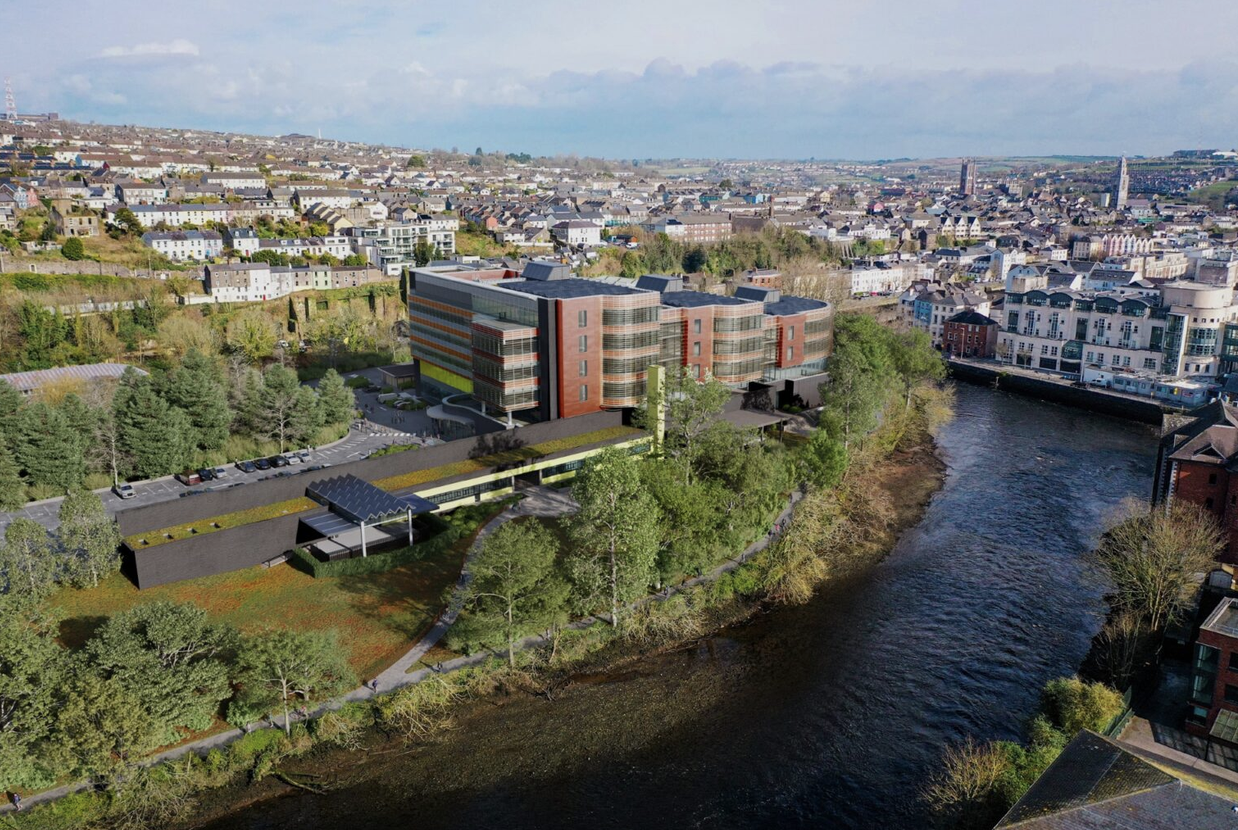
Investment of more than €100 million will double Tyndall’s footprint and strengthen Ireland’s semiconductor and research capabilities
The Irish Government has approved a major expansion of the Tyndall National Institute at University College Cork (UCC), paving the way for one of the country's largest investments in research infrastructure and reinforcing Ireland's ambitions to become a global leader in semiconductor innovation.
The announcement was made during a visit to Tyndall by Taoiseach Micheál Martin and Minister for Further and Higher Education, Research, Innovation and Science James Lawless TD, coinciding with the commencement of Ireland's Presidency of the Council of the European Union.
As part of the project, the Government has approved the required Exchequer funding and authorised UCC to proceed with contracting the preferred construction partner.
The development will more than double the size of Tyndall National Institute through the construction of a new 17,500-square-metre state-of-the-art research facility adjacent to its existing Cork campus. Scheduled for completion in the fourth quarter of 2028, the expansion will significantly enhance Ireland's research capabilities in semiconductors, photonics, microelectronics and other advanced technologies.
The new facility will feature cutting-edge laboratories, specialist cleanroom and research environments, collaborative innovation spaces and dedicated facilities designed to strengthen partnerships with multinational companies, indigenous enterprises, start-ups and academic collaborators.
Speaking at the announcement, Taoiseach Micheál Martin described the project as a landmark investment in Ireland's future innovation economy.
"This significant investment demonstrates the Government's commitment to ensuring Ireland remains at the forefront of research, innovation and advanced technology. Tyndall National Institute is a nationally important asset that connects world-class scientific research with industry, helping to drive economic growth, innovation and high-value employment. This expansion will further strengthen Ireland's leadership in strategically important sectors, including semiconductors."
Minister James Lawless said the project represents another important milestone in delivering Ireland's long-term research and innovation strategy.
"Supported through the Government's INSPIRE programme, this investment will substantially expand Tyndall's world-class research infrastructure and reinforce Ireland's capabilities in semiconductors, digital technologies and other strategic sectors. Tyndall has consistently demonstrated its ability to translate research excellence into commercial impact through strong partnerships with industry and academia, and this expansion will create even greater opportunities for innovation and talent development."
Minister for Enterprise, Tourism and Employment Peter Burke said the investment directly supports the objectives of Silicon Island – Ireland's National Semiconductor Strategy.
"This expansion strengthens Ireland's research capacity, develops our national talent pipeline and deepens collaboration between research institutions and industry. Tyndall already plays a critical role within Ireland's semiconductor ecosystem, and this investment will further establish Ireland as a leading European centre for semiconductor research, development and innovation."
University College Cork President Professor John O'Halloran welcomed the announcement, noting that the development aligns closely with UCC's long-term strategic vision.
"The investment complements our ambitious UCC Futures strategy, where Quantum Technologies and Photonics represent key research pillars. We greatly appreciate the Government's support, which will help attract world-leading researchers and enable the development of next-generation semiconductor technologies within a world-class research environment."
Established in 2004 through a partnership between the Irish Government and University College Cork, Tyndall National Institute has grown into Ireland's largest dedicated research institute and one of Europe's leading centres for information and communications technology research.
Today, the institute works with many of the world's leading technology companies alongside a growing number of Irish enterprises, while also educating highly skilled researchers and engineers who support Ireland's expanding semiconductor sector.
The expansion has been driven by increasing demand for Tyndall's specialist facilities and expertise. Existing capacity constraints have limited opportunities for growth at a time when Ireland is seeking to strengthen its position within the global semiconductor industry and wider deep technology sectors.
Professor William Scanlon, Chief Executive Officer of Tyndall National Institute, said the investment represents a transformative step for both the institute and Ireland's innovation ecosystem.
"This project marks a defining moment for Tyndall and for Ireland's research landscape. It reflects the Government's confidence in our ability to deliver world-class research and innovation in strategically important technologies. The expansion is a cornerstone of our Tyndall 2030 strategy and will significantly strengthen Europe's technological leadership as initiatives such as the proposed EU Chips Act 2.0 and wider technology sovereignty agenda gather momentum. By expanding our research capacity, we will deepen collaboration with industry, accelerate innovation and help develop the highly skilled talent needed to support long-term economic growth and resilience."
Once completed, the expanded campus will provide the advanced infrastructure required to support future scientific discovery, commercial collaboration and enterprise development. The project also aligns with regional, national and European innovation strategies, further reinforcing Ireland's position as a leading destination for semiconductor research, advanced manufacturing and high-value technology investment.
Construction is expected to begin following the completion of contractual arrangements, with the development representing one of the most significant investments in Ireland's research and innovation infrastructure in recent years.

Project News