TSMC’s Soaring Tool Orders Reveal the Scale of the AI Chip Boom
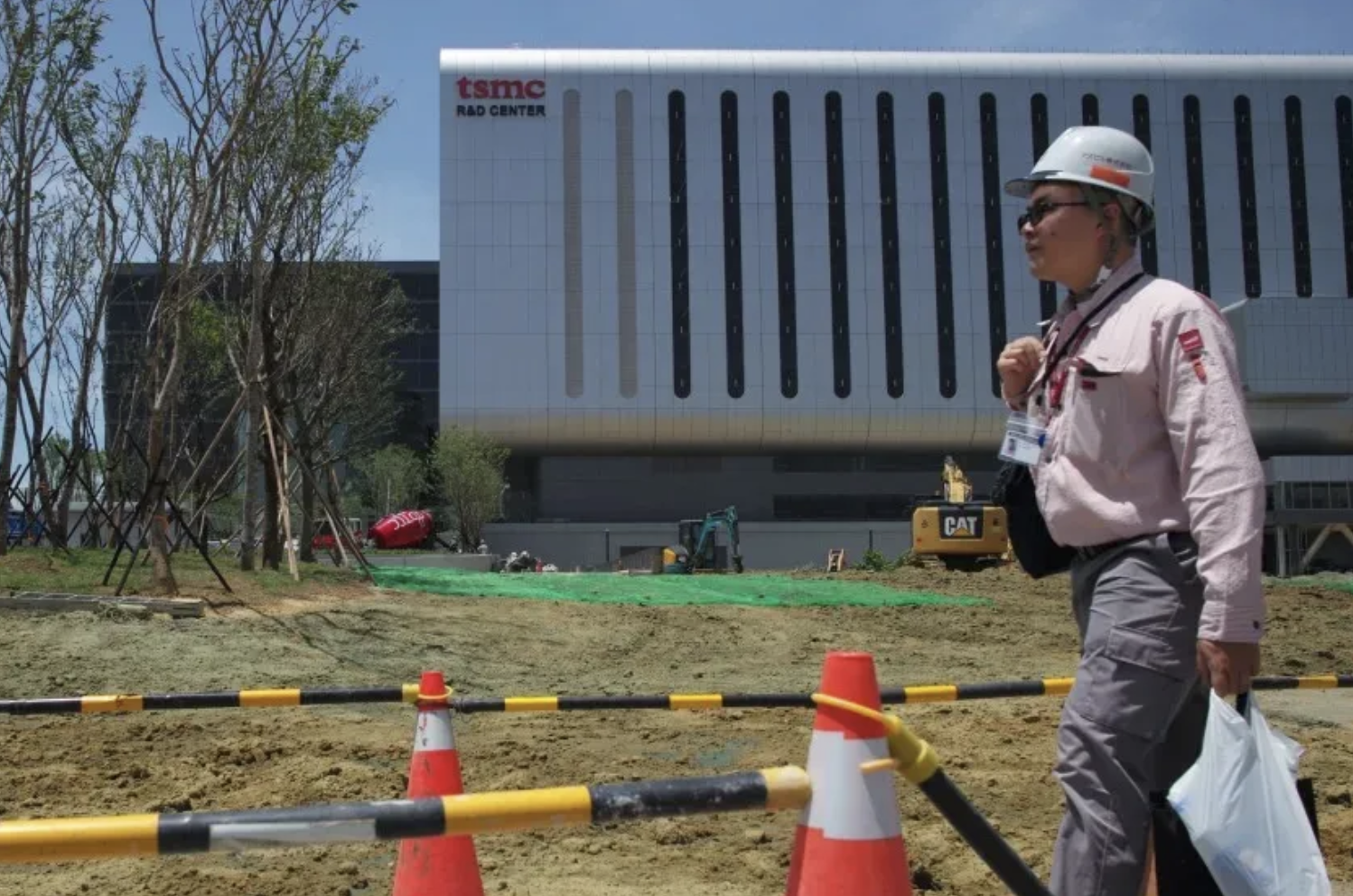
TSMC Equipment Demand Doubled, But Fab Construction Workers Are Running Out
The rapid expansion of artificial intelligence is reshaping the semiconductor industry at an unprecedented pace, and Taiwan Semiconductor Manufacturing Co. (TSMC) has provided one of the clearest indicators yet of how dramatic that transformation has become.
According to TSMC Deputy Co-Chief Operating Officer Cliff Hou, the company's demand for chipmaking equipment has surged to nearly 1.9 times the level forecast at the end of 2025. Despite aggressively increasing spending and capacity, TSMC still cannot fully meet customer demand.
Hou shared the figures during a fireside discussion at the SEMICON Taiwan 2026 CEO Summit in Taipei, an event attended by leaders from companies including Samsung, Google, Microsoft, Applied Materials, and Marvell. Among all the announcements made during the conference, TSMC's revelation about equipment demand stood out as the strongest signal yet of the pressures created by the global AI race.
For investors in semiconductor equipment companies, analysts tracking AI infrastructure development, and anyone assessing whether chip production can keep pace with AI adoption, Hou's comments offered a rare real-time glimpse into the industry's capacity constraints.
A Demand Shock Unlike Anything in the Last Three Decades
Hou described current market conditions as historically unprecedented.
"Compared with the pattern 30 years ago, we have never seen the demand increase that much, that frequency of changes," he told attendees at the summit.
The numbers illustrate the scale of that shift. TSMC established its quarterly equipment purchasing plan at the end of 2025 as a baseline. Within months, demand climbed sharply. By July 2026, the company's need for manufacturing equipment had reached roughly 1.9 times the original forecast, representing an almost complete doubling in less than a year.
The surge reflects a broader explosion in AI-related spending. Industry estimates suggest global investment in AI infrastructure could reach approximately $725 billion in 2026, with 40% to 60% of that total expected to be spent on semiconductors.
As the world's leading contract chip manufacturer, TSMC sits at the center of that spending wave. The company produces advanced chips for Nvidia and manufactures custom AI processors designed by major technology firms such as Google, Amazon, Microsoft, and Broadcom.
Financial Results Reflect the AI Boom
TSMC's second-quarter 2026 results highlight the enormous financial benefits of its position in the AI supply chain.
The company reported revenue of $40.2 billion, an increase of roughly 34% from the previous year, while gross margin reached 67.7%.
To support growing demand, TSMC raised its 2026 capital expenditure forecast to between $60 billion and $64 billion, substantially above its previous guidance range of $52 billion to $56 billion. The increase represents one of the largest revisions to the company's annual investment plans in recent history.
TSMC has also upgraded its growth outlook several times during the year and now expects 2026 revenue to increase by more than 40% in U.S. dollar terms.
CEO C.C. Wei has repeatedly emphasized that AI-driven demand is likely to remain strong through at least 2029 and 2030. However, he has also acknowledged that customer demand currently exceeds what the company can supply.
Speaking at TSMC's shareholder meeting in June, Wei said it would take a long time before the company could fully satisfy customers. He identified preventing TSMC from becoming a bottleneck in the global AI supply chain as one of the company's most important operational priorities.
The Real Bottleneck Isn't Money, It's Construction
What makes the current situation unique is that the limitation is no longer simply access to capital or even chipmaking technology. Instead, one of the industry's biggest obstacles is the ability to build the highly specialized facilities required to manufacture advanced semiconductors.
Modern semiconductor fabs are among the most complex industrial facilities ever constructed. They require ultra-clean environments with extremely low particle contamination, vibration-controlled foundations, and dedicated infrastructure for ultra-pure water, specialty gases, and chemical processing systems.
Constructing and equipping these facilities takes years, regardless of how much money chipmakers are willing to spend.
Why EUV Machines Matter
At the heart of every advanced fab sits one of the industry's most important tools: the extreme ultraviolet (EUV) lithography system.
EUV machines use light with a wavelength of just 13.5 nanometers, generated by firing lasers at microscopic droplets of molten tin. The technology allows manufacturers to print unbelievably small circuit patterns onto silicon wafers coated with photoresist materials.
Because shorter wavelengths enable finer circuit features, EUV has become essential for producing chips at advanced nodes such as 3-nanometer and 2-nanometer processes. These cutting-edge manufacturing technologies power the AI accelerators and GPUs driving today's data-center expansion.
As AI demand continues to accelerate, the challenge facing TSMC and the broader semiconductor industry is no longer whether customers want more chips. The challenge is whether the physical infrastructure, specialized equipment, and skilled workforce needed to manufacture those chips can be expanded quickly enough to keep up.

Project News